

The Benefits of Bespoke Building Design
When people come to us at BKD Developments, they often start with a floor plan they like, a list of rooms they want, or a picture saved from social media. What they don’t always realise, yet, is that the single biggest influence on how successful their future home will be is already there, before a line is drawn. It’s the site.
As building designers, our job isn’t just to design a good-looking house. It’s to design the right house for your block of land. When a home is designed to suit its site, everything works better: comfort, performance, budget, and long-term value. When it’s not, you spend years fighting issues that could have been avoided from day one. For more insights, visit this guide on choosing a site.
Benefits of Bespoke Building Design
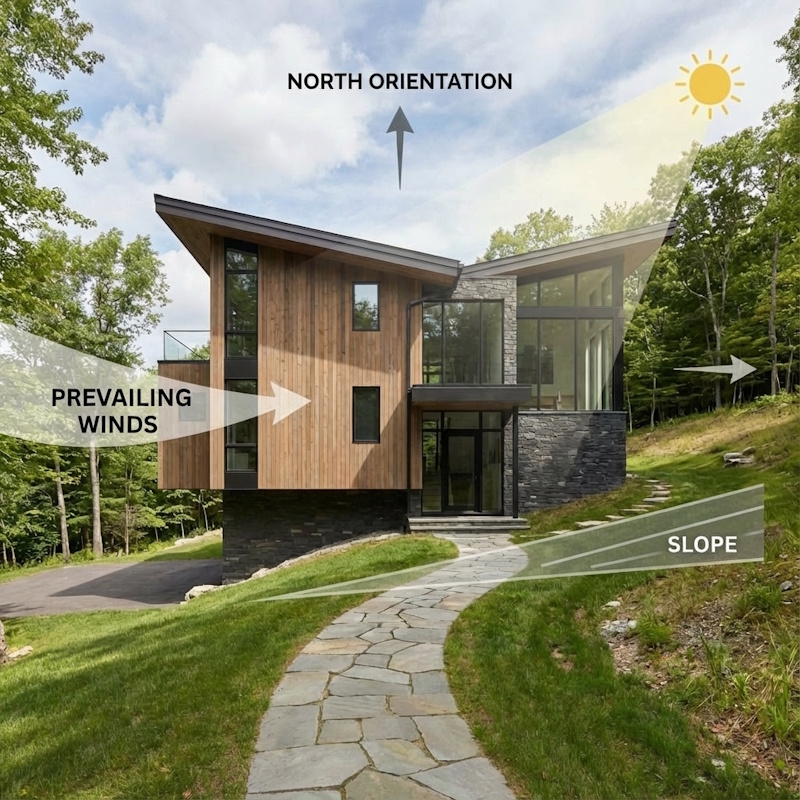
When considering custom home design, it’s crucial to understand its unique advantages over pre-designed plans. Here’s how bespoke building design stands out.
Every Block is Different
No two sites are ever the same, even in the same estate.
Orientation, slope, access, neighbours, setbacks, overlooking, prevailing winds, services, and views all play a role in how a home should be planned. A block that looks simple on paper can behave very differently once you understand how the sun moves across it, where water flows, or how neighbouring homes impact privacy.
For example:
-
A north-facing block offers fantastic opportunities for passive solar design, but only if the living areas are placed correctly.
-
A sloping site can increase costs or become a design feature, depending on how it’s approached.
-
A narrow lot may limit window placement, but smart planning can still achieve light, ventilation, and privacy.
At BKD Developments, we start with the site first. We analyse what it gives you and what it restricts you from doing. This allows the design to respond naturally, instead of forcing the block to behave like something it’s not.
Designing With the Site – Not against it.
Good design doesn’t fight the land, it works with it.
At BKD Developments, we use site conditions to shape the home in a way that feels logical and effortless. This might mean:
-
Stepping the house with the natural slope instead of cutting and filling excessively
-
Positioning living spaces to capture northern sun while shielding them from summer heat
-
Aligning windows and doors to encourage cross-ventilation
-
Using changes in level to create zoning and privacy rather than walls
When the design works with the site, the home feels calmer and more comfortable. Spaces are brighter without glare. Rooms stay cooler in summer and warmer in winter. Outdoor areas are usable more often, not just on perfect days.
These outcomes aren’t accidental, they come from understanding how buildings interact with their environment and designing accordingly.
Project Homes Limitations
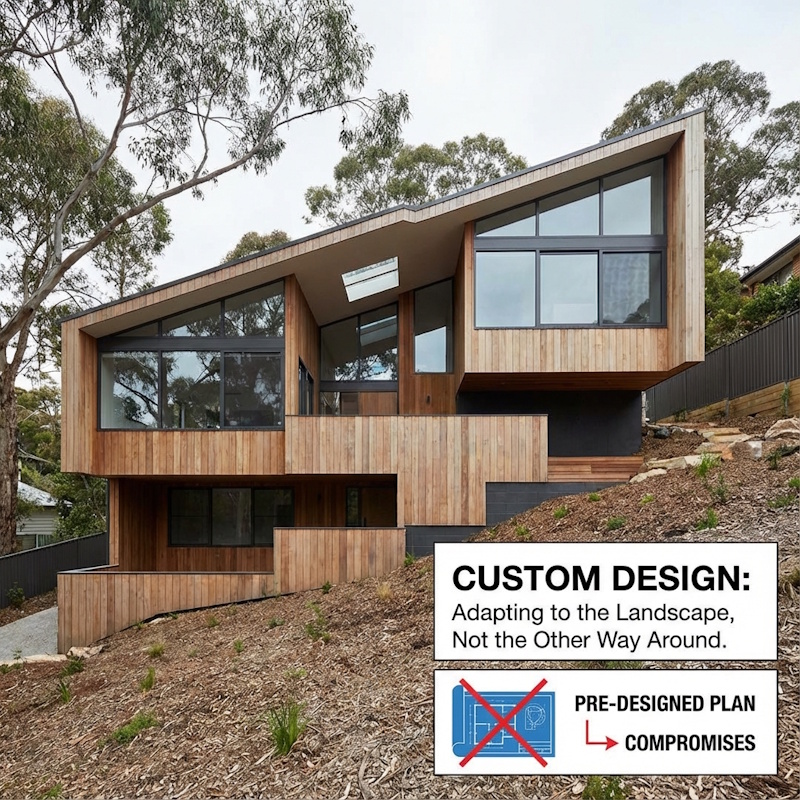
While project homes may seem convenient, they come with limitations that bespoke designs overcome.
The Limits of Pre-Designed Plans
Project home designs can look appealing at first glance. They’re polished, familiar, and often marketed as “tried and tested.” The problem is that they’re designed for an ideal block, flat, wide, perfectly oriented, with minimal constraints.
Most real-world sites aren’t ideal.
Once a pre-designed plan is placed on a specific block, the compromises start:
-
Living areas end up facing the wrong direction.
-
Windows are removed or downsized due to setbacks or overlooking rules.
-
Ceiling heights drop to accommodate slope or height limits.
-
Retaining walls, split levels, or structural changes add unexpected costs.
What starts as a “standard” plan quickly becomes a heavily modified one. By the time those changes are made, the design often no longer flows as intended, and the budget has quietly blown out.
A custom designed home, created specifically for your site, avoids this process altogether. Instead of modifying a design to make it fit, the design starts with the constraints and opportunities already in place.
Better Performance, Lower Running Costs
One of the biggest misconceptions we see is that energy efficiency is something you “add on” at the end, through solar panels, batteries, or expensive systems.
In reality, the most effective energy savings come from the design itself.
Before you spend money on technology, good design can:
-
Reduce the need for artificial heating and cooling
-
Improve natural daylight, lowering lighting costs
-
Minimise heat loss in winter and heat gain in summer
-
Increase comfort without ongoing energy use
Orientation, window placement, shading, insulation strategy, and floor plan layout all play a bigger role in performance than many people realise. A well-designed home often requires smaller systems because it simply doesn’t need as much assistance to stay comfortable.
This is where designing to suit the site really pays off. Instead of trying to correct problems later, the home works efficiently from the moment you move in, saving money year after year.
A Designer’s Perspective
From a designer’s point of view, the site is rarely the problem, it’s usually the opportunity.
We’ve worked on blocks that clients initially described as “difficult,” “awkward,” or “challenging.” Often, those same sites end up producing the most interesting, functional, and rewarding homes when they’re designed properly.
A slope becomes a split-level home with character and separation.
A narrow block becomes a light-filled courtyard design.
A restrictive orientation forces clever planning that results in better privacy and comfort.
The turning point is always the same: shifting from trying to impose a house onto the land, to allowing the land to inform the house.
At BKD Developments, that’s how we approach every project. We don’t start with a generic plan, we start with your site, your goals, and how you want to live. From there, the design grows naturally, making the most of what’s already there instead of working against it.
If you’re planning to build, the question isn’t “What house do I want?”
It’s “What is the best house for this site?”
When that question is answered properly, everything else falls into place.